
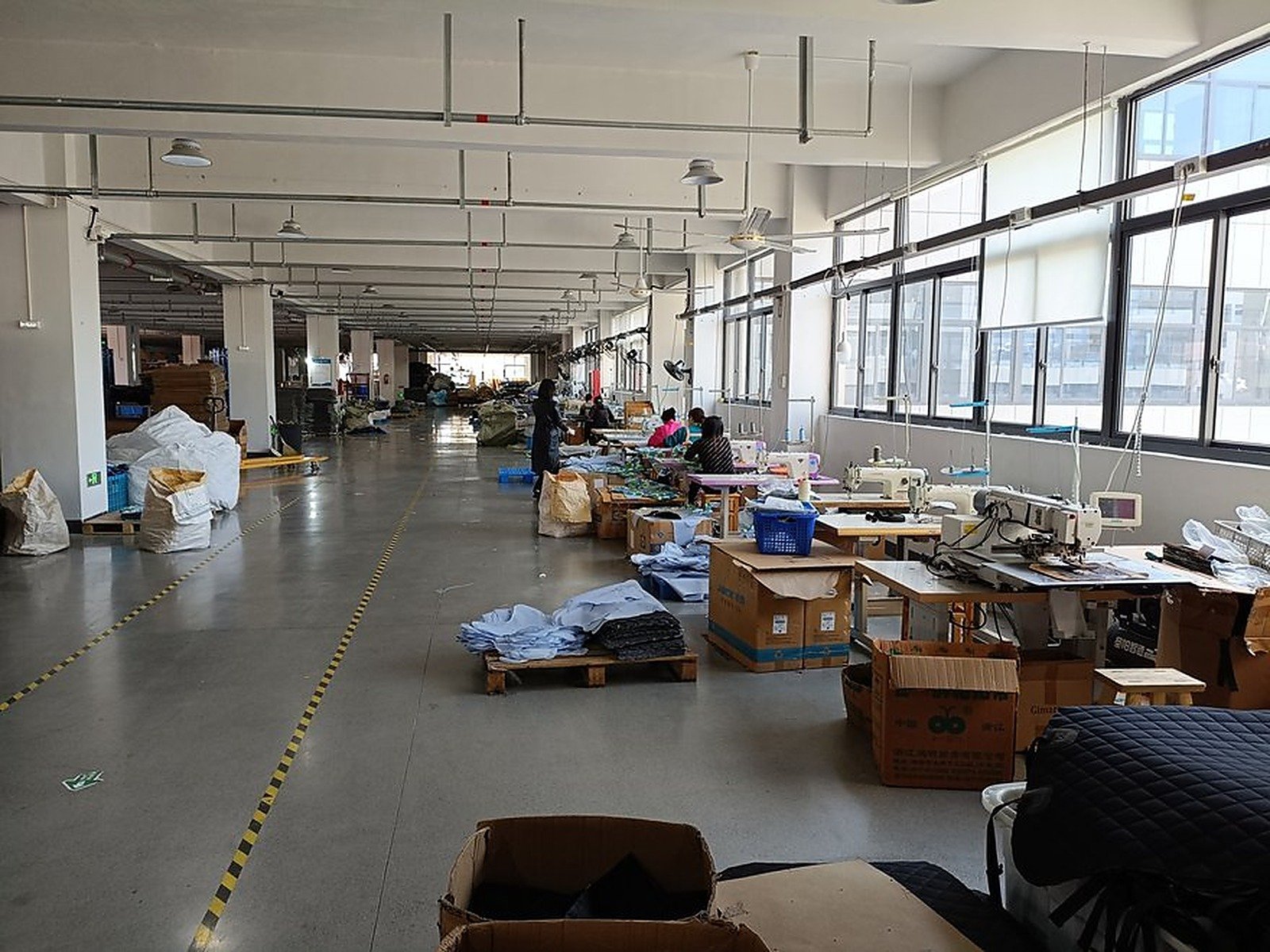
A sample looks like a small product. In the sample room it is a short production run at the scale of one piece: material checked, pattern cut, decoration set up, parts sewn, product fitted, then packed. The days a sample takes are mostly this sequence, not a parcel waiting for a courier.
The short answer
A sample is prepared in 5 days once the specification is settled, and that window is working time: material check, cutting, sample-room sewing, logo or print set-up, fitting and a check against the spec. Transit and your own review sit outside it. Late artwork and a specification that moves mid-build are the usual delays. The fee is US$25–40 per model, credited back in full against the first order.
What the five days cover
The clock starts when the specification is settled, not when the first email arrives. Material, dimensions, colour, decoration and pack have to be defined before the sample room can cut anything. Once they are, the work can run in sequence, and the window is realistic for a stocked material and approved artwork.
It does not cover courier transit, customs or your review, and those can take longer than the preparation. If a material has to be ordered in, or a print set-up is new, the schedule is confirmed on your spec sheet. That is the difference between a sample made from what is on the shelf and one made from what your specification names.
Inside the sample room: five jobs behind one piece
| Job | What happens | Why it cannot be skipped |
|---|---|---|
| Material check | Fabric, padding, backing, webbing and closures pulled against the spec | Found here it costs a conversation; after cutting, the sample. |
| Cutting | Pattern laid, grain and pattern alignment checked, pieces cut | One piece still has a grain; cut the wrong way, it behaves differently. |
| Decoration | Embroidery, print, label or patch set up and proofed | Artwork must be separated, sized and colour-matched; logo problems start here. |
| Assembly | Sample-room sewing, binding, padding and closure | It must be the construction the bulk will use, not a simplified version. |
| Fitting and check | Dimensions measured, product fitted or loaded, hardware worked, packed | A sample that does not fit or work is a first attempt, not a sample. |
Each job is small and routine. What makes the sample valuable is that all five happen to one piece before anyone calls it ready.
The queues that start before sewing does
Most of the wait sits before the machine. Fabric may be stock or ordered; a custom colour can need dyeing, and a dye lot must arrive before cutting. Webbing, buckles and zips may come from another supplier. Artwork has its own queue: a small logo has to be redrawn, embroidery digitised, print colours separated. Each step is short, but they run in sequence.
Specification decisions add another queue. Soft, strong or premium are not instructions a sample room can cut to; someone interprets them, and you approve or correct that interpretation. A reference product shortens this stage because it answers what a description cannot: how firm the padding feels, how wide the binding is, where the logo sits.
Why a mid-build change costs more than a late start
The sequence is chained. Change the fabric after cutting and the pieces are recut. Change the logo after the embroidery file is set and the set-up repeats. Change a dimension after fitting and the pattern returns to the table. A revision is not one more day; it is a partial restart, which is why a sample absorbs one planned revision but struggles with a series of small ones.
The approved sample also becomes the inspection reference for the bulk. If it was rushed or made with a substitute, every unit after it is measured against a weaker standard. A sample is the cheapest place to be difficult, and the most expensive place to be vague.
How to shorten the wait without rushing the work
- Send one complete brief. Product or reference, dimensions, materials and GSM, Pantone references, logo files, packaging and market.
- Name one decision-maker. Three reviewers sending separate comments means three revisions.
- Consolidate feedback. One message, photographs with a ruler in frame, every point numbered.
- Approve artwork first when decoration is the risk, so the room is not waiting on a file mid-build.
- Book against your launch date; tell us the in-market date at enquiry and the sample can be scheduled with room for one revision.
While the sample is made, prepare what does not depend on it: packaging artwork, listing copy, barcode and the review checklist. The full route to written approval is in the sampling timeline, and the service page shows what you approve at each step.
Questions we get asked
Why does a sample take 5 days when the product is made every day?
A production line is set for a run; a sample interrupts or precedes that run, and passes through the sample room, decoration set-up and fitting. Five days is that sequence compressed, not a queue invented to slow you down.
Can I pay to rush a sample?
Some steps can overlap when material is in stock and artwork is approved, and we will say what is possible for your specification. We will not skip the check that makes the sample an inspection reference, because that saving costs more at bulk. The schedule is confirmed on your spec sheet.
What most often delays a sample?
Late artwork, a specification that changes while the sample is being built, and a material that has to be ordered. Transit and the buyer’s review are the other two, and both sit outside the preparation window. If you have a date, say it early.
Is courier cost included in the sample fee?
The fee covers the sample itself: US$25–40 per model, prepared in 5 days and credited back against the first order. Courier cost and transit time depend on your address and are confirmed with your quotation.
If you have a product in mind, send the reference, the material and the date you need it in market, and we will confirm what can be ready and when. The service page shows the sample stage in the order, the sampling timeline sets out every step, and the contact page reaches us directly — one business day.