
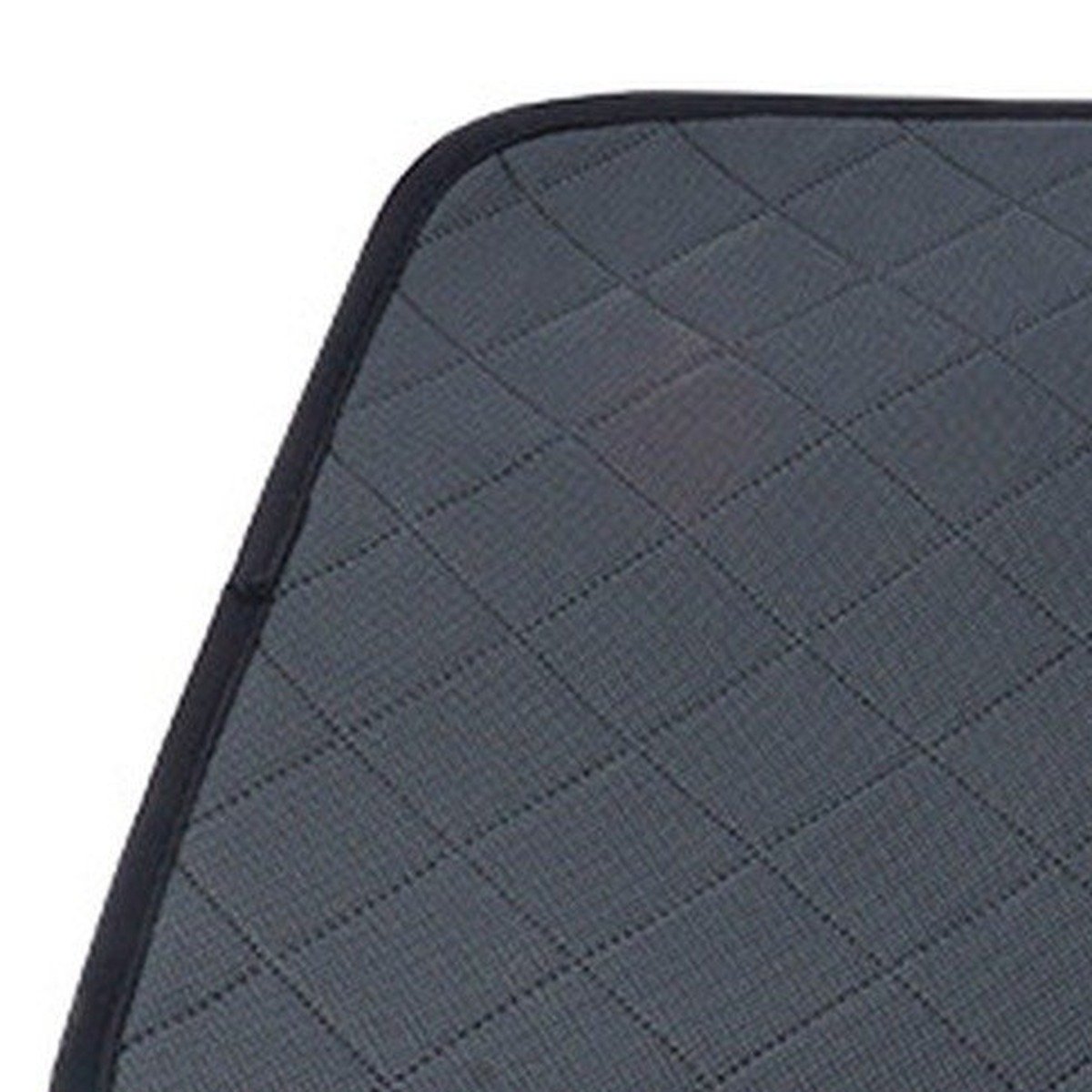
Two washable pads can look identical in a photograph and behave nothing alike in a home. The difference is the four layers between the dog and the floor, and what happens to each one when the pad is soaked and washed.
The short answer
Read a pad as four layers: the face fabric against the dog, the absorbent core in the middle, the waterproof backing underneath, and the binding that seals the edge. Changing any layer moves something real — surface dryness, drying time, wash life, leak risk or cost — and each is confirmed on your spec sheet, not assumed from a photo. Test the option that matters on your sample: US$25–40 per model, prepared in 5 days, credited back against your first order.
The four layers, and what each one decides
A change at one layer rarely stays at one layer: a lighter core dries faster but holds less, a heavier backing stops more but stiffens the pad and slows drying.
| Layer | What it decides | What a material change moves |
|---|---|---|
| Face fabric | How the surface feels, how readily liquid passes through, how the pad looks after washing. | Surface dryness, drying speed, colourfastness, cost direction. |
| Absorbent core | How much liquid the pad takes and holds, and whether the surface feels dry afterwards. | Capacity, rewet, drying time, weight in the wash. |
| Waterproof backing | Whether the floor or crate stays dry, and how the pad sits once damp. | Leak protection, stiffness and noise, drying time, cost. |
| Binding and edge | Whether liquid escapes sideways at the seam, and whether the edge survives washing. | Leak risk at the perimeter, wash durability, the finish of the pad. |
Face fabric: the layer the customer touches
The face decides what a customer notices first: how the pad feels under a paw, how readily liquid passes through, and how it looks after washing. A brushed knit usually trades a softer hand for slower drying; a flat woven face tends to dry faster and stay flatter, at the cost of a plainer look. Either way, the face belongs on the spec sheet by construction, composition and weight — “soft fabric” is a description, not a specification — and colourfastness is checked on the sample against the wash wording you intend to print, as the spec sheet guide sets out.
Absorbent core: capacity is a construction, not a thickness
Two pads of the same thickness can hold different amounts, because capacity comes from the core’s material and layer count, not from how plump it looks in a photo. Compare four behaviours: how much liquid the pad takes before it stands on the surface, how the surface feels pressed afterwards (rewet), how long the pad takes to dry, and how the core holds shape across cycles — matting, clumping or travelling inside the quilt.
This is the layer that shows up in returns most often, so test it directly: pour a fixed amount at the centre, wait, press with a dry cloth, and note where the pad still feels damp. The core goes on your spec sheet by material and layer construction, confirmed per model.
Backing and binding: where leaks start
More pads fail at the perimeter than in the middle. The backing decides whether liquid stops under the cushion or reaches the floor; the binding decides whether it can travel sideways along the seam. Compare a backing damp rather than dry: does the pad stay flat when loaded, does it go stiff or noisy, does it recover after a wash. Then soak the edge — one that claims to contain liquid and then wicks it sideways is worse than a plain bound edge that makes no claim. Both go on the sheet as named materials, not adjectives.
How to compare at sample stage
You do not need a laboratory — you need one protocol run the same way on every pad.
- Name the failure you are buying against — leaking, a wet surface, slow drying, wash wear — and test the layer responsible first.
- Pour, wait, press. A fixed amount, a fixed wait, then a dry cloth, so you read rewet rather than trusting the surface.
- Check the perimeter. Lift the loaded pad and look at the edge and backing — that is where a floor gets wet.
- Wash it as hard as your label promises, then check colour, shape, core position and edge once dry, and write the winner into the spec sheet.
The routine around those tests is covered in the sample evaluation checklist. While you compare, decide whether the pad also competes with a disposable option — see washable versus disposable dog pads.
Questions we get asked
Which layer should I compare first?
The one your complaint comes from. A wet surface points to the face and the core; a wet floor to the backing or the edge; a pad that sags after washing to the core and the binding.
Does a thicker pad hold more liquid?
Not by itself — capacity comes from the core’s material and construction, so two pads of the same thickness can hold different volumes and dry at different speeds. A fixed pour, a fixed wait and a dry-cloth press say more than a description.
How many washes should a washable pad survive?
That number belongs to your care label and your market, not to a general figure. Write the wash protocol into the spec sheet and test the sample against it before you approve, so the claim you print matches what was tested.
Can I change one layer’s material to hit a price point?
Yes, deliberately and one layer at a time. Ask what the swap moves — capacity, rewet, drying, leak protection, wash life — and test the combination before it goes on the sheet; a layer change invalidates the sample you approved.
If you are comparing pad materials for a range, tell us the failure you are buying against and the market you sell into, and we will say which layer we would change first and what to test at sample stage. Start from the washable leak-guard dog pad construction, or write to us through the contact page — one business day for a reply.