
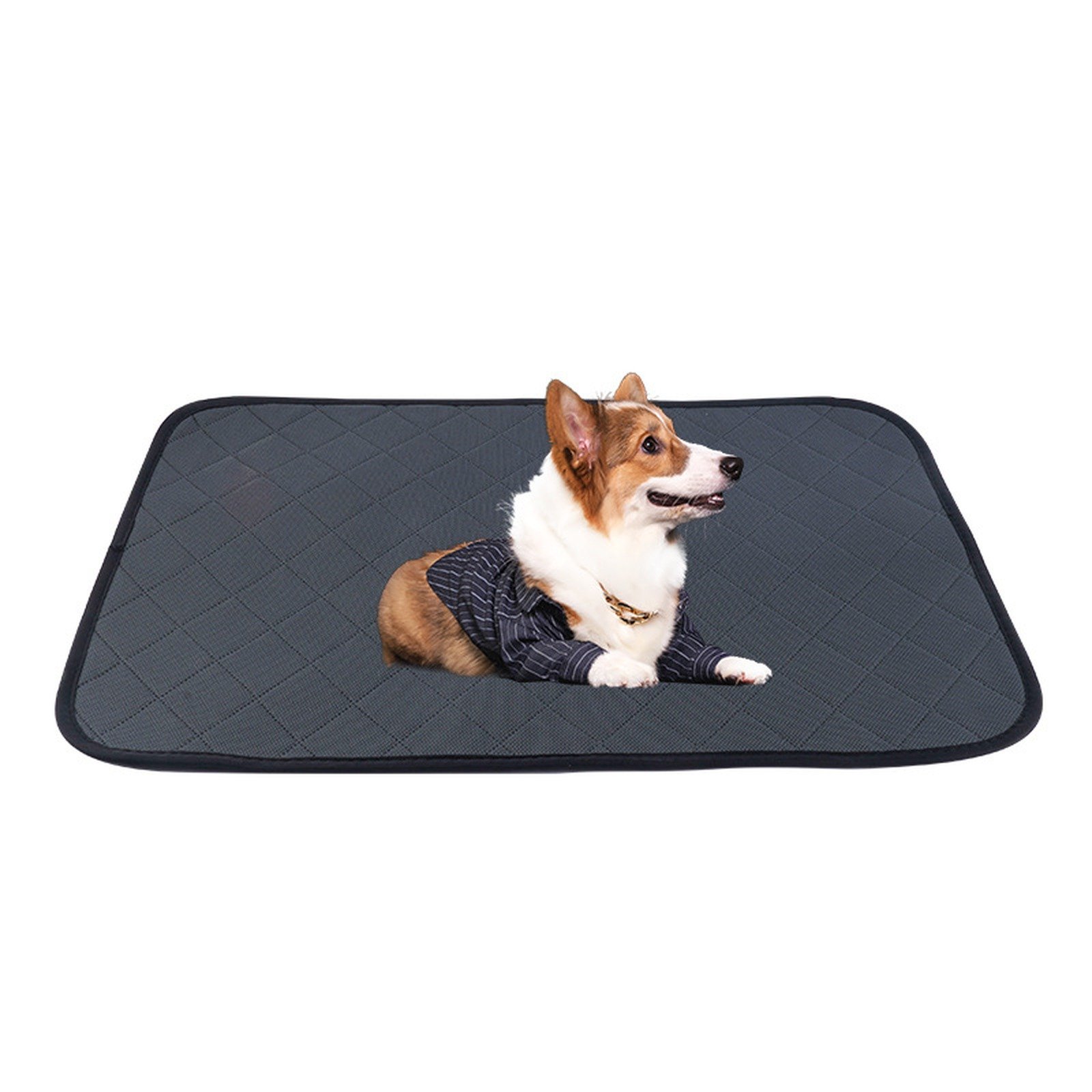
Every washable claim is a test protocol wearing an adjective. Ask two suppliers what machine washable means and you will get two different cycle counts, two different temperatures and two different ideas of a pass — usually neither written down.
The short answer
Write the protocol before the care label: the cycle count claimed, what one cycle includes, the wash and dry conditions, and the pass criteria for colour, shrinkage, seams, absorbency and hardware. Those parameters follow your market’s test method and your customer’s requirement sheet — confirm them on your spec sheet, then test a sample against them before the bulk run. Samples are US$25–40 per model in 5 days.
A wash claim is a protocol, not an adjective
Machine washable describes a material only inside a method. A coated backing can survive a cold wash and fail a tumble dry; a binding can hold its shape for a season and fray at the corners once heat is involved. The word on the pack is safe only when it summarises a test record.
For a buyer, the useful question is not whether the product is washable but how many times, under which conditions, and what remains true afterwards. That is a specification, and it belongs on the spec sheet before the care label is designed.
Settle the protocol before the first cycle
Four lines decide the result, and none of them has a universal answer. Your market’s test method and your customer’s requirement sheet set the values; we confirm them on your spec sheet.
| Line | What it fixes | Why it decides the result |
|---|---|---|
| Cycle count | How many washes the claim covers, and whether drying counts inside a cycle | A wash-only protocol overstates a wash-and-dry claim |
| Wash conditions | Temperature, detergent, load size, machine type | Heat and chemistry age coatings, dyes and elastic |
| Dry method | Line, rack or tumble, and the heat level | Many backing and binding failures begin in the dryer |
| Pass criteria | Colour, shrinkage, seam integrity, absorbency and hardware action, with a tolerance for each | Without a tolerance, “still acceptable” is an opinion |
Counting cycles so the number means something
One cycle should be defined, not assumed: a wash at the stated conditions followed by the stated drying method, with the stated load. A test that counts washes but ignores drying is testing half the product’s life.
Count from a new, unused piece, and test the finished product rather than a swatch. Seams, binding, zips and closures all see the cycle, and those are where failures usually start. Record each agreed checkpoint with a photograph and a measurement rather than a memory; at the end, the comparison is against an unwashed control of the same model.
If your customer names a laboratory method, ask for the report and check that the method matches the care label. If the claim comes from a retail programme, ask which standard the programme names and match the test to it.
What fails first, and what it tells you
| Symptom after cycles | Likely cause | What to check next |
|---|---|---|
| Core bunches or sags | Quilting or lamination not matched to the wash | The attachment method between layers |
| Backing cracks or separates | Heat sensitivity, or a lamination that sees too much heat | The dry method and the backing construction |
| Binding frays at the corners | Edge stress, narrow binding, a stitch that stops short | Binding width and seam finish |
| Colour fades unevenly | Dye fastness against detergent and temperature | The colourfastness method and the dye lot |
| Zip or buckle stiffens, corrodes or cracks | Material, plating or detergent | The hardware specification |
Each symptom points at an interface rather than a material, which is the logic set out in washable pad layers explained. A substitution does not remove the failure; it usually relocates it.
Run the test before you commit to the run
- Order at least two pieces of the same model: one control, one for the wash series.
- Agree the checkpoints in advance — after the first cycle, at the midpoint and at the end of the series.
- Keep the control sealed, labelled and out of sunlight, so the comparison is physical rather than remembered.
- Cut the washed piece open at the end and compare layer order, attachment and backing with the control.
- Keep the wash log with the approved sample, because the care label should be written from the test, not from the intention.
The approved sample stays the inspection reference for the bulk; the wash record is what supports the claim on the pack. Cycle count and conditions are confirmed for your market and your customer requirements — never borrowed from a competitor’s packaging.
Questions we get asked
How many washes can I claim?
The number your test supports, confirmed against your market’s method and your customer’s requirement. It is not a marketing choice: claim more than the test covers and the returns arrive at the end of the product’s life, when the review does the most damage.
Should I test the fabric or the finished product?
The finished product. Seams, binding, backing, zips and closures all see the cycle, and those are where failures usually start. A fabric test alone cannot support a claim about the product.
Does the protocol change for a spot-clean product?
Yes. A spot-clean claim needs its own method: the cleaning agent, the technique and what is checked afterwards. Do not put a machine-wash cycle count on a product the care label tells customers to wipe.
What if my customer’s standard differs from my market’s?
The stricter of the two usually governs, and the difference belongs in writing on the spec sheet. Settle the method at quotation stage so the sample you approve is tested the same way the bulk will be.
Send the wash claim you want to make, the market and the customer’s requirement, and we will say which lines belong in the protocol before a sample is washed. Start from the collections, read washable pad layers explained, or reach us through the contact page — one business day for a reply.