
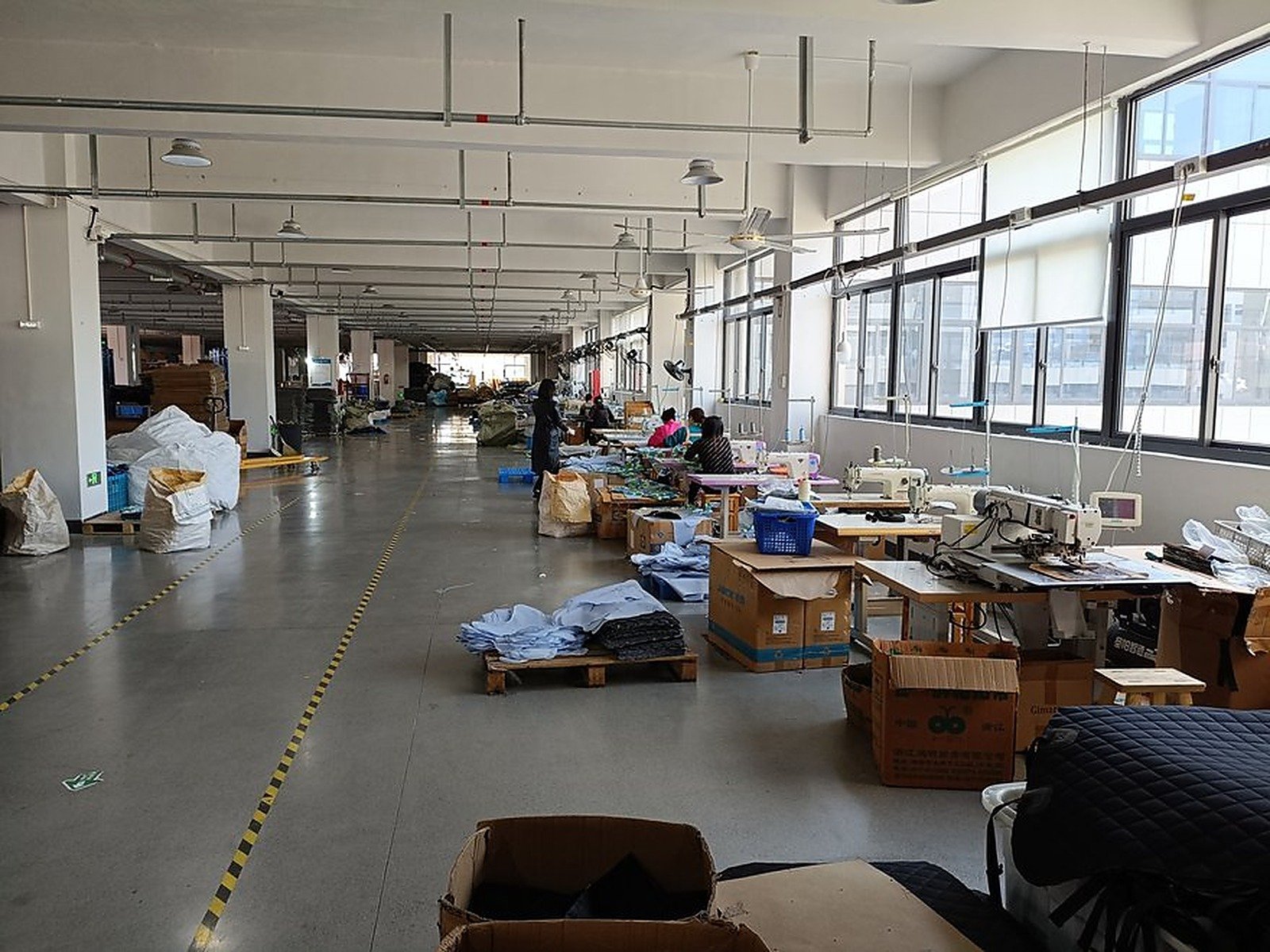
Supplier verification fails in a predictable way. Buyers collect documents that prove a company exists, then treat them as proof the product will be right. Those are different claims, and the gap between them is where a bad order starts.
The short answer
Check the legal entity first: the business licence name must match the quotation, the proforma invoice and the bank account. Then the floor, through a scheduled video walkthrough or a visit; then the documents; then the sample. A licence proves a company exists; a video proves a floor exists; a sample proves one-off capability. None proves a repeat order will match, which is why batch records matter.
Start with the legal entity, not the brochure
Ask for the business licence or a current registry extract before the first payment. Read the registered name, number, address, business scope and status, then put those details beside the quotation, the proforma invoice and the bank beneficiary. The point is to establish who can be pursued if the order goes wrong.
The bank detail is where most problems surface. A beneficiary in a different name from the contracting company, a personal account, or a request to pay a third party is a stop-and-check moment. Ask for a written explanation and a matching document before money moves. Check the registry yourself where it is searchable; a name can be close without being the same company.
What each kind of evidence can prove
Assign each item a limit before you collect it. This is the version we use for a buyer’s document pack.
| Evidence | What it proves | What it does not prove |
|---|---|---|
| Business licence or registry extract | A legal entity exists, with a registered name and status | Product capability, ownership of the floor, export record |
| Platform profile and reviews | Trading history on that platform | That your specification will be met |
| Video walkthrough | A floor and process steps exist | That your order runs there, or that capacity is free |
| Test report or certificate | A named sample was tested to a named standard on a date | That production lots use the same material |
| Sample | The supplier can make the product once, to a specification | That the bulk run will match it |
Platform profiles and references are history, not proof. A verified badge usually means an identity or document was checked, not that the product was audited. Reviews show buyers received something. Ask for two references in your market and what went wrong on their order; a specific problem and its resolution beats a logo wall.
A video walkthrough, made into evidence
A scheduled, live, unedited walkthrough is the closest thing to a visit when travel is impractical. Agree the route: material store, cutting, sewing, decoration, inspection, packing. Ask to see a work order, the reference sample on the inspection bench, and where finished goods wait.
It proves the floor and process exist. It does not prove your order will run there, that capacity is free in your window, or that the material in the store matches your spec sheet; those need a work order, a schedule and a material record. Our production partner’s floor is 4,000 m² and visits are welcome; the partner’s records, sent with your quotation, confirm 100% on-time delivery and a 64% repeat-buyer rate. A video call can happen before a flight.
Certificates and test reports: read the scope, not the logo
A certificate is evidence only for the exact thing it names. Ask which document, for which material or model, which laboratory, what date, which standard, and what result. A fabric test is not a finished-product test, and a management-system certificate is not a product certificate.
Verify through the issuer where possible: a report number, a QR route or a laboratory contact. For EU textiles, buyers ask for evidence under REACH, the EU chemicals regulation, naming the substances tested and the laboratory. Under GPSR, responsible-person details belong on the product or listing; a certificate does not replace them.
The sample and the paper trail around it
Order a sample and watch the process. Does the supplier ask specification questions before quoting? Do you receive a spec sheet, a Pantone reference and a packing description? Does it arrive tracked, and do comments come back with corrections rather than reassurance? A good sample with no documentation is a one-off.
Ask for a batch record and inspection photos from a previous order, with customer details removed. Willingness to show process evidence beats a certificate wall, and it shows what you can check on repeat orders. The sample fee is US$25–40 per model, prepared in 5 days and credited against the first order.
Questions we get asked
What should I ask for before paying a deposit?
The contracting entity’s licence or registry extract, a quotation with the Incoterm stated, a spec sheet, the sample terms, and bank details in the same name as the entity. Match the four before you pay; a certificate wall answers none of those questions.
Is a video tour as good as a visit?
They answer the same question at different depth. A video is cheaper and earlier, and a live walk can show the route you need. A visit lets you stop and ask who signs the sample. Neither proves your batch; both reveal whether the process is real.
How do I verify a test report?
Read the scope: the sample named, the standard, the laboratory, the date and the result. Then verify the report number with the issuing laboratory. A report that names a material you are not buying is not evidence for your order.
Can a sourcing partner be safer than a factory?
It can be, when the partner is a named legal entity that holds your specification, names the production partner on the quotation and answers for the batch. It can also be less safe if the layer is anonymous. Verify a partner with the same document trail and ask who signs the sample.
If you are checking a supplier, send the document pack and we will say which claims it supports and which it does not. The about us page sets out who we are and who does what, factory visit preparation covers the floor, and the contact page reaches us directly — one business day.