
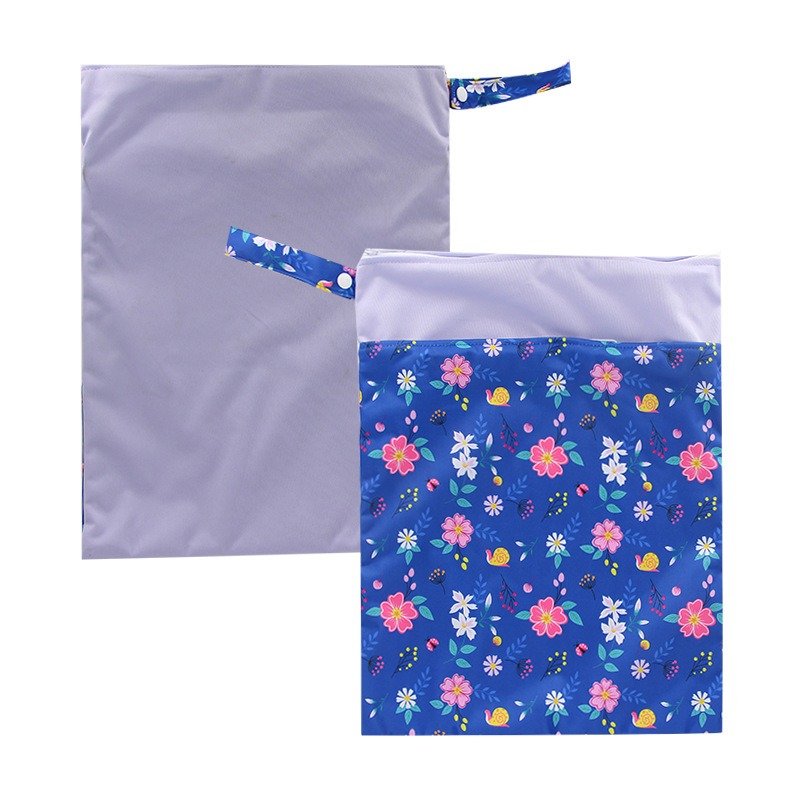
A product that arrives as a bare item creates work: somebody has to bag it, tag it, barcode it and price it before it can be sold. Retail-ready packaging removes that step — the unit that comes out of the carton is the unit that goes onto the shelf or into a marketplace warehouse.
The short answer
A retail-ready pack has to do three jobs: protect the product, carry the information the retailer or platform needs, and look like it belongs on a shelf. A printed polybag with a header card suits low-ticket SKUs, a retail box suits gifts and rigid or fragile items, and a multipack suits products bought in quantity. Barcode, size and care information belong on the pack — and the pack specification should be on your quotation before the order is placed.
What retail-ready means in practice
There are three tests, and a pack has to pass all of them. First, can a stockroom scan it and shelve it without repacking? That means a barcode on the outside and a pack that stands or hangs as sold. Second, is the unit complete — product, label, size, care information, everything the customer needs to buy and use it, already on the pack? Third, will it survive the trip: the inner pack inside the carton, the carton itself, and a normal delivery. A pack that passes the first two tests but not the third costs more than it saves.
The channel decides how strict each test is. A marketplace warehouse needs the unit barcode and the carton markings to match the listing exactly, because the pack becomes the unit of handling. A physical shelf cares about how the pack reads at arm’s length and whether it can hold its shape after customers have handled it.
Polybag, box or multipack
| Pack type | Where it fits | What it gives you | What to watch |
|---|---|---|---|
| Printed polybag with header card | Low-ticket SKUs and size ranges sold side by side. | Low pack cost, hangs or stands, and carries the product name, size and barcode on the header. | Thin film creases and sags; header printing quality carries the whole shelf impression. |
| Retail box | Gift items, higher-ticket SKUs, rigid or fragile products. | Protection in transit, shelf presence, and space for usage copy and care wording. | A box bigger than the product costs freight; each pack size needs its own artwork and dieline. |
| Multipack — banded or boxed | Products bought repeatedly, where one unit is not a week’s supply. | Higher basket value and a clear reason to buy more than one. | Each unit count is a separate barcode; the pack must make the count obvious at a glance. |
Information that belongs on the pack
- Brand and product name, plus the model or variant that the listing refers to.
- Size, stated the way your customers compare products, not only in internal codes.
- Barcode on the outside of the unit — and a separate one for each multipack count.
- Care and use wording, present on the pack or the sewn label, wherever the buyer will look for it.
- The origin marking and legal information your market requires. For the European Union, the General Product Safety Regulation (GPSR, Regulation (EU) 2023/988) has applied since 13 December 2024, and the Packaging and Packaging Waste Regulation (PPWR) applies from 12 August 2026 — both put requirements on the pack itself, which is why packaging is now a compliance decision as well as a design one.
The practical consequence is timing: legal wording has to be settled before the print run, not after. The EU packaging and safety rules guide covers what changes for sellers into those markets.
Where packaging decisions get expensive
- Changing the pack after the artwork is printed. A new size, a new unit count or a new claim usually means new plates and a new print run.
- Changing the unit count after barcodes exist. Multipack counts are separate barcodes; the listing, the carton and the pack all have to match.
- Leaving the pack spec off the quotation. Cartons are what move, so pack size and units per carton change the freight. The quotation should show the packing and the Incoterms — FOB by default, in plain language.
- Losing the connection between the pack and the label. The logo, the wording and the barcode should be designed as one system; see how the pieces fit in logo, label and hangtag options.
Questions we get asked
Do I need a retail box?
Only where the product needs protection or where the purchase is a gift. A printed polybag with a header card carries the same information at a lower pack cost. Decide by the channel: a marketplace listing needs the barcode and the pack dimensions more than it needs a box.
Who designs the packaging artwork?
You supply the artwork and we apply it to the pack. Ask for the dieline before your designer starts, so the artwork is built to the finished size rather than resized to fit — resizing is where logos lose their proportions and where type ends up where it cannot be read.
How do I stop packs arriving crushed?
Ask what the carton is doing: the units per carton, the inner packing and the carton specification are all part of the pack spec. For a first order, ask for a packed sample and judge it after a normal delivery, not before one.
Does packaging change my freight cost?
Yes. Cartons are what get loaded, so a pack that is larger than the product, or a carton that holds fewer units, changes how much you pay per unit for the same journey. That is why the packing and the Incoterms belong on the quotation, where you can see them before you order.
If you want a pack that goes straight from the carton to the shelf, send us the product, the channel and the market, and we will come back with the pack options, the information each one needs to carry and the barcode structure that follows from it. The service page covers how packing and labels are specified with the product, and the contact page reaches us directly — one business day for a reply.