
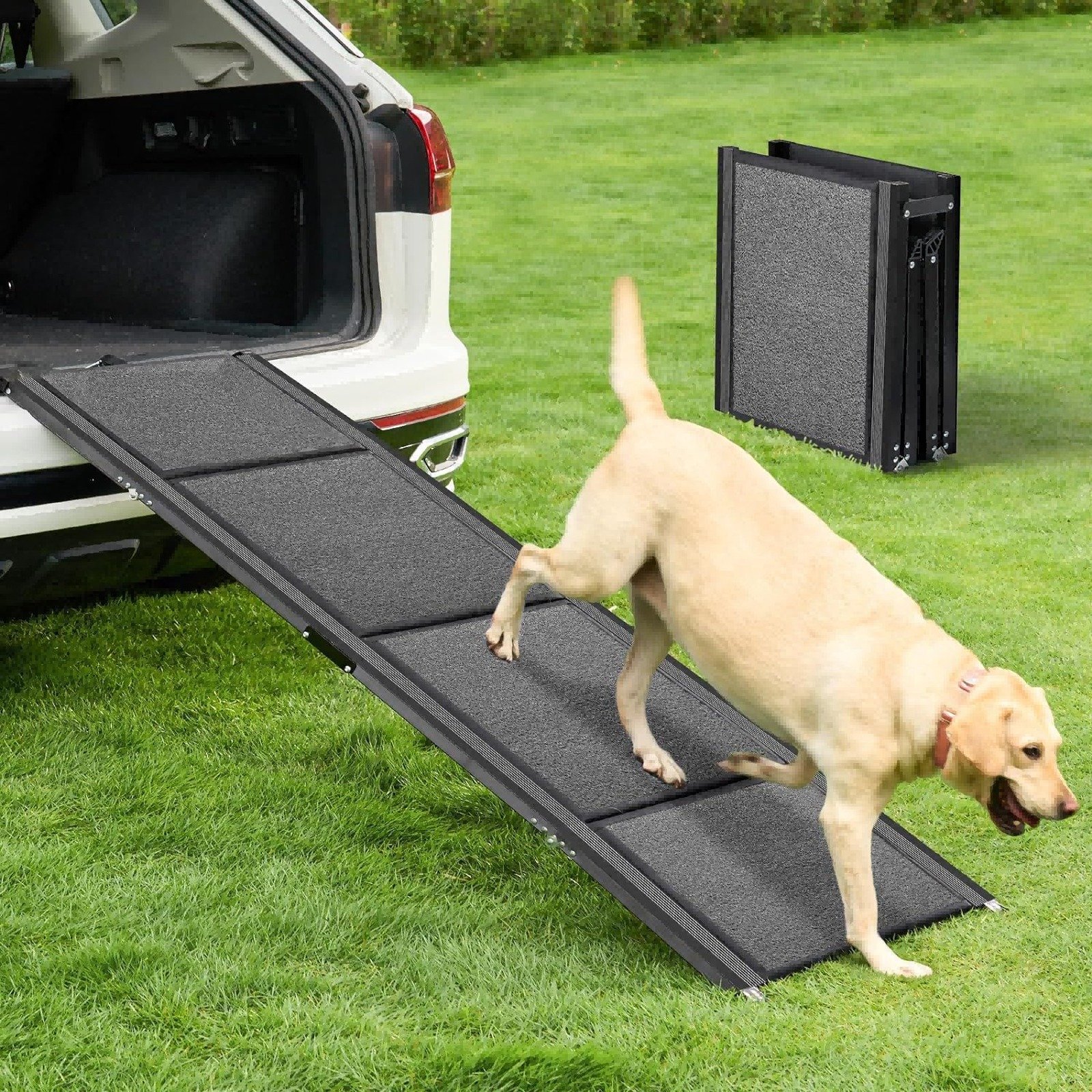
Every ramp surface trades two failures that pull in opposite directions. A surface rough enough to hold a wet paw is often rough enough to catch a claw. A surface smooth enough to let a nail slide over it is often smooth enough to let the paw slide too. The buyer’s job is not to find a surface with no trade-off, but the one their customer’s dog can live with.
The short answer
Carpet gives grip and a familiar feel but loop pile can snag nails; rubber gives traction and easy cleaning but a hard compound can be slippery when wet; grit coatings give the most bite but are abrasive, wear at the edges and are hard to clean. Match the surface to the dog’s nails, the weather and how the ramp folds, then test dry, wet and with a claw drag. Surface, pattern and attachment are confirmed on your spec sheet; trial quantities on request, samples US$25–40 in 5 days.
Two failures, opposite directions
Slip is the failure buyers expect. The paw slides, the dog loses confidence and the ramp is refused. Snag is the failure they discover later: a claw catches in a loop or a weave, the dog pulls, a nail tears or the surface puckers. The two failures are measured differently, and a test that only checks grip will choose the surface most likely to snag.
A dog reads both at once. Long nails and a loop-pile carpet are a bad pair however well the carpet grips. A smooth rubber that releases a wet paw is a bad pair however easy to clean. Decide which failure your customer’s dog is more exposed to before you compare materials.
The three surfaces buyers quote
| Surface | Grip | Snag and wear | Cleaning and folding |
|---|---|---|---|
| Carpet, loop pile | Strong dry grip, good when damp. | Loops catch claws and the pull spreads. | Holds hair and mud; creases at the fold. |
| Carpet, cut pile or needle-punch | Good grip, denser and flatter underfoot. | Less snagging; can pill and wear at the edges. | Easier to brush; needle-punch is more durable. |
| Rubber, ribbed or solid | Good traction; ribs channel water away. | No loop to catch; a hard compound can slide when wet. | Wipes clean; adds weight and resists folding. |
| Grit coating or anti-slip tape | High friction, especially dry. | Abrasive; wears smooth and peels at the edges. | Hard to clean; can mark trim and skin. |
The names are starting points. Two carpets with the same description can behave differently because pile height, backing and density all change the result, so the surface belongs on the spec sheet by construction, not by adjective.
Match the surface to the dog and the vehicle
Nails come first. A dog with long nails needs a surface that gives slightly and has no loops to catch; a dense needle-punch or a rubber surface is easier to live with than a deep loop pile. A senior dog that knuckles or drags a paw needs grip at low speed, a different demand from a young dog running up.
Weather comes second. Wet paws and a wet surface are the real test, and the surface also has to dry: carpet holds water and can develop a smell, rubber sheds it. Third comes the vehicle. Grit can mark interior trim, carpet looks domestic, rubber looks utilitarian — and the ramp still has to fold. The hinge is where a surface lifts or bridges, and no material choice survives a fold it was not attached for.
Test the sample, not the photograph
- Drag a fingernail or a blunt nail across the surface at an angle. Any catch is a snag risk, however good the grip feels.
- Wet the surface, press a damp cloth on it and try to slide. Note where it releases.
- Fold and unfold the ramp repeatedly at the hinge, then look for lifting, puckering or gaps.
- Brush or vacuum the surface. Carpet and grit hold hair; grit also holds grit.
- Run a finger along the edge trim, where lifting starts.
A dog is the final test, but not the first one. If the surface catches a fingernail, it will catch a claw; if it slides under a damp cloth, it will slide under a wet paw.
Writing the surface onto the spec sheet
- Surface type and construction, with the pattern or pile named, not just colour.
- Where and how it is attached: full surface or strips, bonded or fixed.
- The hinge treatment and edge trim, because those are where the surface fails first.
- Grip and snag results from the sample tests, recorded against the retained sample.
- Cleaning instructions that match the surface, so a customer does not destroy it with a hose or stiff brush.
A surface change is a new sample. Swapping carpet for rubber changes grip, weight, fold behaviour and cleaning, even when the ramp looks the same in photos — and that is exactly the substitution a reorder is most likely to hide.
Questions we get asked
Which ramp surface suits senior dogs?
One with grip but no loops to catch a dragging paw: a dense needle-punch carpet or a rubber surface are common starting points. Confirm the construction on your spec sheet and test it wet; a senior dog is often less steady on a damp surface.
Is carpet or rubber better in the rain?
Rubber sheds water and dries faster; carpet holds it and can develop a smell. If the ramp lives outdoors, test wet grip rather than choosing by dry feel.
Will grit coating damage my car?
It is abrasive by design, so it can mark trim and wear at the edges. If the ramp is stored against interior panels, check the edge trim before committing.
Can I change the surface without resampling?
No. Attachment, fold behaviour and grip change with the surface, so the approved sample no longer describes the product. Treat a surface change as a new sample and a new spec.
Tell us the dog, vehicle and storage, and we will shortlist the surface and the test that should decide it. Start with the foldable dog ramp collection, read dog ramp slope guide for the angle the surface has to work at, or reach us through the contact page — one business day for a reply.