
Most first-range mistakes are made in the spreadsheet, not on the shelf. A founder picks the product that is most interesting to develop, or the one a competitor sells well, and only later finds that nobody was asking for it. The first SKU has one job: prove that your channel and your label work together, at the lowest cost of being wrong.
The short answer
Pick the product you are already being asked for, that one sample and one small run can validate, and that gives you something to photograph and explain. Everything else — the second size, the colourway, the adjacent category — can wait for reorder data. Samples are US$25–40 per model in 5 days; stocked models start at 200 pcs for pads and mats and 300 for belly bands, with trial quantities on request for the rest.
The demand signal is already in your inbox
Before a range exists, demand shows up as questions. A retailer asks whether the pad can stay put on a hard floor. A marketplace message asks for a band in a smaller size. Each is a purchase trigger.
Read three places before you shortlist: the enquiries you already receive, the search terms reaching your own listings, and the reviews on the products you would compete with. “Worked for a week, then the backing curled” describes the job the product has to do better than any category size estimate.
You are not looking for proof that a category is large. You are looking for evidence that a specific customer, in a specific moment, is already trying to buy.
Validation cost is the real filter
Two candidates can look equally attractive and cost very different amounts to learn from. The unit cost is not the number that matters here; the cost of being wrong is — samples, specification work, artwork, photography and the time between deciding and knowing.
| Candidate | What it proves | What validation takes | Where it gets hard |
|---|---|---|---|
| Washable leak-guard pad | The absorbency and leak claim | One sample, a wash routine, a layer specification | The claim must be tested |
| Male dog belly band | Fit logic and repeat purchase | Samples from both ends of the size break-out | Sizing on weight, a closure that fits alone |
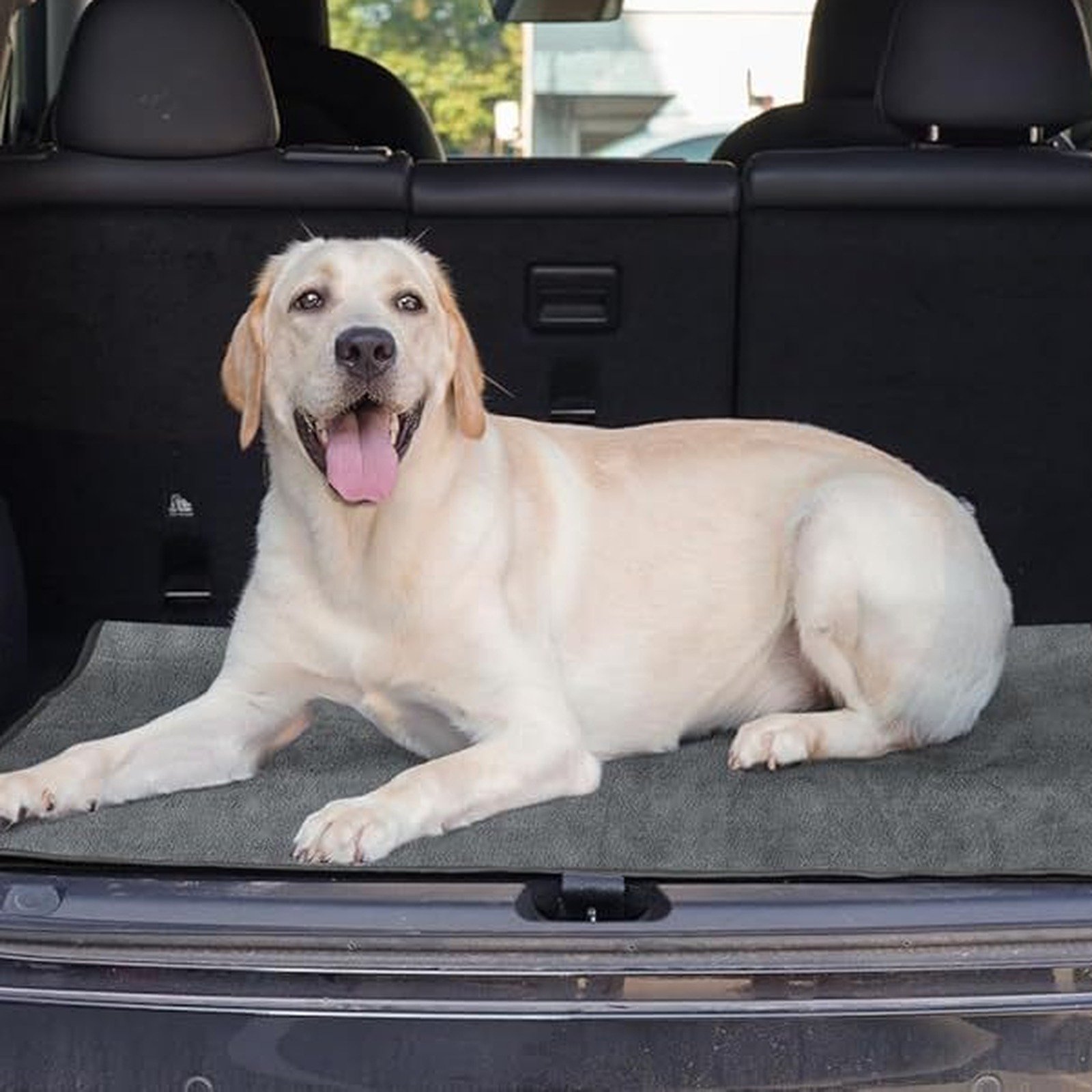
| Self-warming travel mat | A construction story that photographs well | One sample, size and fold checks | Warmth rests on construction, not a plug |
| Harness, ramp or car seat cover | Fit and safety in a considered purchase | Trial quantities, more specification lines | Load, fit and vehicle size vary |
On our range samples cost US$25–40 per model and take 5 days, credited in full against the first order; pads and mats start at 200 pcs per model, belly bands at 300, and the rest run at trial quantities on request.
Content is part of the product decision
A first SKU has to produce assets, not just units: a hero image, an in-use image, a demonstration of the job it does, a size explainer and care instructions that match the test behind the wash claim. Products that photograph as a flat object give you less to work with than products that show a change — a pad taking liquid, a band being fitted, a mat folded into a car.
If the product cannot be explained in a short video and a still image, the listing will lean on adjectives, and adjectives do not close a sale where buyers compare on fit and function.
Five tests a first SKU has to pass
- One job, one sentence. If it needs a paragraph to explain what it is for, it is not the first SKU.
- One size logic you can publish. Weight for bands and harnesses, space for pads and mats, confirmed for your market.
- A specification that can be inspected. Material, construction, measurements and closure on your spec sheet; a sample approved against a verbal description is approved against nothing.
- A repeat path. A multipack, a second room, a second dog — something that turns one purchase into the next.
- A story your channel can carry. Photography, demonstration and a care claim that survives the test behind it.
Most first SKUs fail the third test: the product makes sense, but the specification is too thin to inspect against, so the first bulk run is judged on impression. Write the specification lines before you sample.
Narrowing the shortlist
Take two candidates into sampling rather than five, compare them on the same tests, and let the samples settle what the spreadsheet cannot: which one feels like a finished product in the hand. Once the first SKU reorders, the structure decisions belong to a separate conversation, set out in building a price ladder across a pet product range.
Do not launch a first SKU that only makes sense inside a range you have not built. It has to stand on its own in a listing and in a photograph.
Questions we get asked
Should the first SKU be the one competitors sell best?
Not necessarily. A competitor’s bestseller proves a category exists, not that your customer is asking you for it. Read the competitor’s listing as evidence, then start from the questions already reaching you.
How many samples should I order before deciding?
One per candidate is enough for the first comparison, and a second piece if you plan to wash or load one to failure. Keep an untouched piece as the reference for the bulk order.
What if the product needs a specification I cannot verify?
Ask for the missing line in writing and confirm it on your spec sheet before the bulk run. If a supplier cannot name the material, construction or test method, change the line or change the product.
How long does a first sample take?
5 days per model, at US$25–40, credited in full against the first production order. The sample conversation is also where the size break-out and pack format get settled.
Send the product you are being asked for, the channel you sell in and the market, and we will tell you what we would change about the candidate before you spend a sample on it. Start from the product collections to see what already exists as a model, or reach us through the contact page — one business day for a reply.