
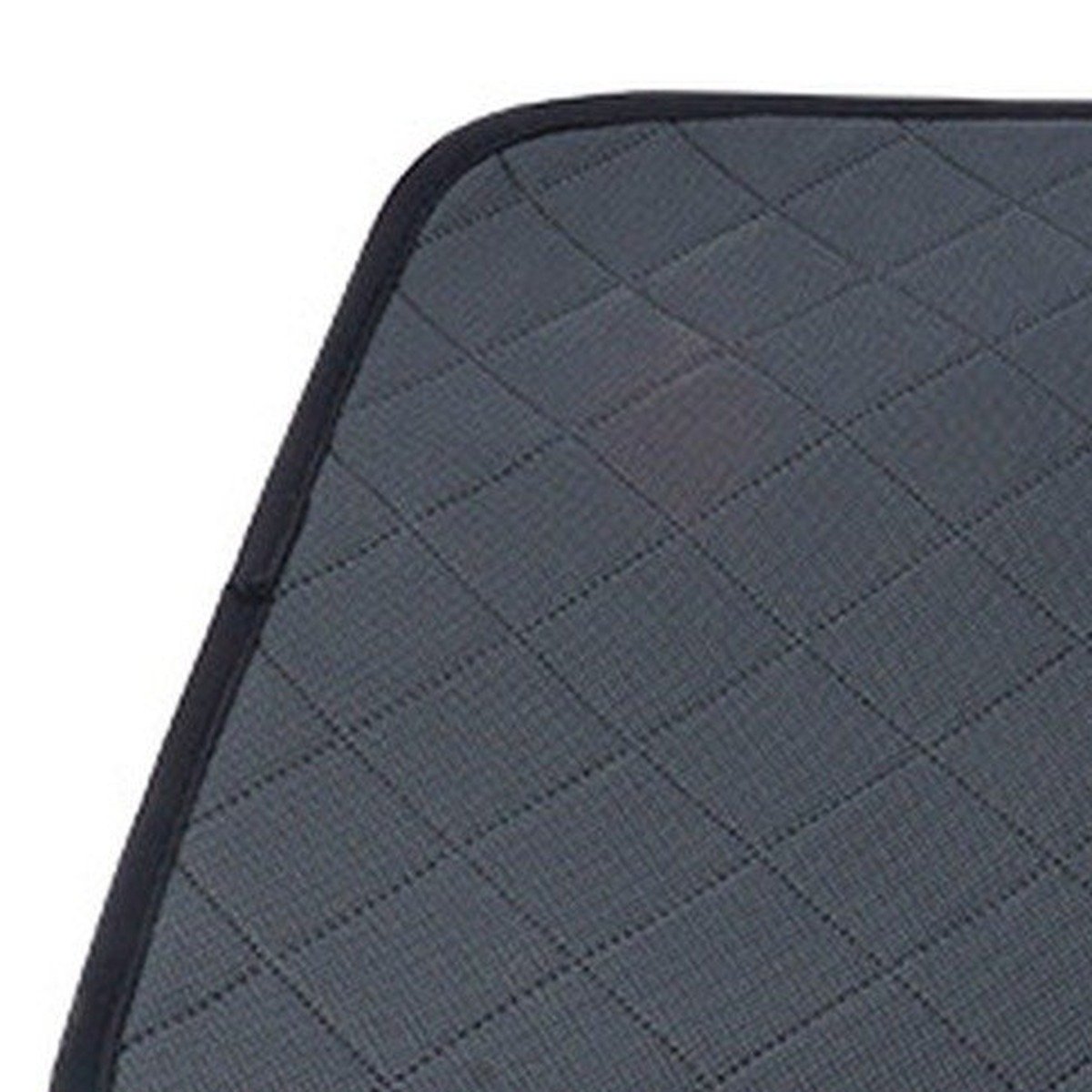
Sellers often ask which pad to add to their range as
if it were a straight fight between two products. It is not. They do different jobs, and they do different
things to your customer relationship.
They are not really competitors
Disposables own the moments: the vet appointment, the long car journey, the first week of a puppy, the
weekend away. Nobody reuses a disposable, and nobody expects to. They sell against a problem that is
temporary or specific.
A washable pad owns the place: the corner the older dog has slept in for eight years, the crate, the boot
of the car. It is bought once and used daily, which makes it a completely different product commercially —
not because it is better, but because it stays in the house.
If your range already serves older dogs, you are not choosing between them. You are choosing which one
is the reason a customer buys from you and which one is the add-on.
What each one does to your customer relationship
A disposable pad is replaced on a schedule and reordered like a consumable — fine for revenue, thin on
loyalty, because the customer is buying a category rather than your brand. Every retailer within reach sells
a version of the same thing.
A washable pad is different in one commercial way: the customer keeps using it, and it carries your label
every day in the room where the dog sleeps. It is the one textile product in the range with a reason to be
photographed by the customer and mentioned to a friend, and it is the product that makes the second purchase
possible — belly bands, a travel mat, a ramp.
The honest list of complaints about washable pads
Washable pads have real weak points, and a spec sheet should answer each one directly:
- Edge leaks. The most common complaint by far. It is a construction issue — a
leak-guard border rather than a flat quilted edge. - Smell that comes back after washing. Usually a layering problem: odour control has to
be built into the absorbent layer, not sprayed on top. - Heavy when wet, slow to dry. A trade-off against absorbency, decided by GSM and the
size range you stock. - Wash durability. Ask what wash count the factory tests to rather than accepting
“machine washable” — the answer belongs in the specification, and the test method belongs in writing.
None of these are reasons not to stock a washable pad. They are the reasons a cheap one lets you down,
and the reasons the specification conversation matters more than the unit price.
How we would spec a first washable pad
For a buyer launching into an older-dog range: one size that fits the common crate footprint and one
larger size for the floor, leak-guard border on every size, one colour that hides the first wash, and a
printed label rather than a printed box. Minimum order is 200 pieces per model, and one model is enough to
start — the size range and the second colour are decisions for the reorder, not the launch.
The stocking decision, in one line
Lead with the pad, because it is the product the customer buys when the accident first happens; add the
belly band next, because it is the product the same customer reorders. Everything else in the range is there
for the day that customer asks for something. That is the order we would build a senior range in, and it is
the answer we give when a buyer asks us where to start.